
Can a Solar Generator Recharge Fast Enough for Cloudy Days?
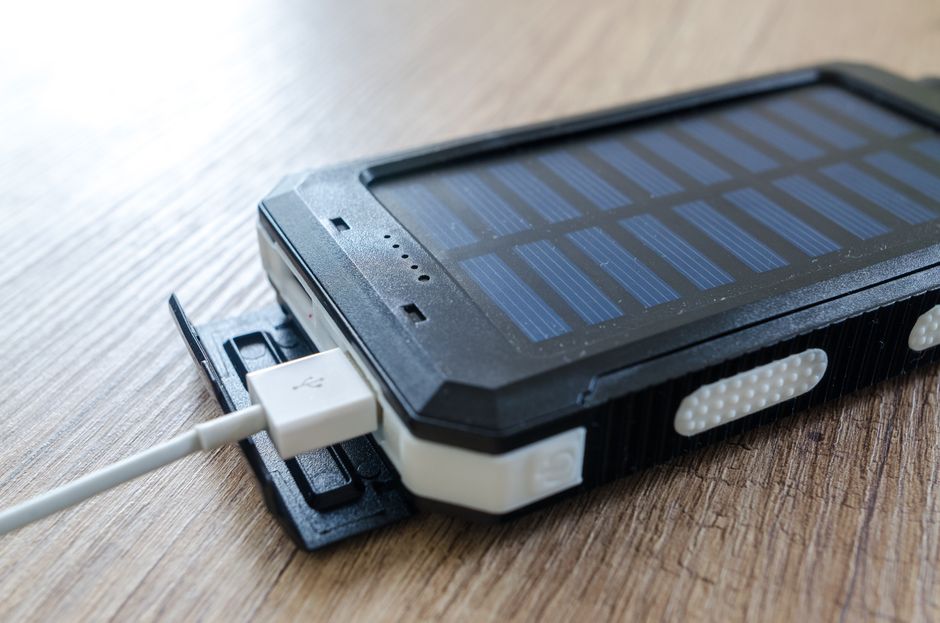
A portable solar generator can sustain essential loads through cloudy days only when its expected daily solar energy exceeds that day's load after accounting for weather, panel position, system losses, and the station's solar-input limit. Start with a kWh budget, not panel wattage: if your refrigerator alone uses 1.5 to 2.0 kWh daily, a small panel setup may preserve battery charge poorly.
That is the decision test. A solar generator is not “enough” because the box has a large battery or the panels add up to an impressive watt number. It is enough when the daily energy math still works on the bad-weather day you are actually planning for.
How long does a solar generator take to recharge with panels?
Recharge time depends on usable solar energy, not the panel label, so there is no honest single-hour answer without a location, date, panel setup, battery state, and input limit. Use a location-specific estimate, then compare the energy the station needs with the energy the panels can realistically deliver that day.
The weak question is: “How many watts are my panels?” The stronger question is: “How many kWh will this array deliver here, in this season, after losses, while my essential loads are still running?” That swap cuts through most optimistic outage calculations.
NREL's PVWatts V8 documentation makes the point plainly through its inputs: modeled output depends on location, array type, tilt, azimuth, weather data, inverter efficiency, DC-to-AC ratio, and system losses. Its default inverter efficiency is 96%, meaning delivered AC energy is lower than raw DC panel production even before other losses enter the picture.
Build the estimate in this order. First, note the power station's battery capacity and its maximum solar input from its documentation. Second, obtain hourly or daily solar output for your location and season. Third, subtract the energy being used while charging. NREL's Incident Energy Systems Model uses that same operating logic: solar meets active demand first, batteries follow, and remaining solar is curtailed once the battery is full.
| Planning item | What to record | Decision it supports |
|---|---|---|
| Battery energy | Power station capacity in kWh and current state of charge | How much energy must be replaced |
| Solar array | Panel nameplate watts, tilt, orientation, and expected solar output | How much energy can arrive on a given day |
| Input ceiling | Maximum solar input accepted by the station | Whether extra panel wattage can be used |
| Active loads | Device watts multiplied by planned daily hours | How much solar is consumed before charging begins |
| Bad-weather case | Cloudy-day estimate, shade exposure, and soiling condition | Whether the setup survives more than one day |
Do not hide a mismatch with a larger panel array. If the station cannot accept the available input, the excess cannot shorten recharge at that moment. If solar production is first serving a refrigerator and other live loads, it cannot simultaneously refill the battery.
Will a solar generator recharge on cloudy days?
Yes, a solar generator can recharge on cloudy days, but the amount must be estimated for those conditions rather than assumed from a sunny-day panel rating. Cloud cover is only one variable; shade, dirt, orientation, season, and conversion losses can turn a seemingly adequate plan into a slow decline.
NREL's 2025 portable-power model explicitly changes shading-loss assumptions by scenario: 1% for sunnier-than-typical conditions, 3% for a typical day, and 10% for a cloudy, rainy, or smoky scenario. That is not a universal field measurement for every roof, yard, or panel. It is a useful planning signal: poor conditions deserve their own case, not a footnote.
Use a three-case drill. Write down a favorable-day estimate, a typical-day estimate, and a poor-day estimate. Then run the essential-load budget against all three. A system that only recovers on the favorable day is a one-day convenience setup, not a multi-day outage plan.
Soiling belongs in the same conversation. PVWatts allows a monthly soiling-loss input from 0% to 100% and defines soiling as reduced incident irradiance from dust or other seasonal contamination. The practical move is simple: inspect panels, remove avoidable shade, set their angle and direction deliberately, and recalculate after changing the setup. “The panels are outside” is not a production estimate.
Keep refrigerator planning grounded in food safety, not optimism. The CDC's food-safety guidance says to keep refrigerators at 40°F or below and freezers at 0°F or below. With doors closed, it says food stays safe up to 4 hours in a refrigerator, 48 hours in a full freezer, and 24 hours in a half-full freezer. That window can reduce immediate battery demand, but it is not a substitute for a sustained power plan.
How many solar panels do I need to recharge a power station each day?
You need enough panel capacity to produce more daily energy than your essential loads consume while staying within the power station's accepted solar-input limit. Start with the load budget, use local solar modeling for expected production, and size for the poor-day case if the goal is multiple cloudy days.
The U.S. Department of Energy gives the core worksheet: multiply each appliance's wattage by the hours it runs per day to determine required kWh of storage. Do that device by device. Do not use a household-wide guess when the actual goal is a short list of critical loads.
| Essential load | What to enter | Daily kWh calculation |
|---|---|---|
| Refrigerator | Use its measured or documented daily use | For context, DOE-funded ORNL material puts a representative U.S. household refrigerator at 1.5 to 2.0 kWh per day |
| Router | Watts × hours needed | Divide watt-hours by 1,000 |
| Lights | Total watts × hours used | Divide watt-hours by 1,000 |
| Phones | Documented charging energy × planned charges | Convert total Wh to kWh |
| Medical device | Device documentation: watts × required hours | Divide watt-hours by 1,000; do not treat this as optional load |
Add the rows. That total is the daily load the panels must support before they add reserve. Next, compare it with a PVWatts estimate that matches your location and season. PVWatts offers hourly AC and DC output plus monthly solar radiation, which is the right level of detail for this decision. A nameplate-only calculation skips the conditions that determine whether you wake up with more battery or less.
Separate the setups by mission. A one-day setup may prioritize a charged battery, brief refrigeration support, communications, and lighting. An expandable multi-day setup needs enough daily production to cover the active load, meaningful storage for weak production periods, and inverter capacity above peak demand. NREL's model checks both whether inverter capacity exceeds peak load and whether the portable system is large enough for the assigned load. Capacity and power are different checks. Pass both.
Apply the same proof-first buyer discipline used in this site's used Toyota Highlander buyer's guide: verify the rating, the limits, and the evidence that matters for your use case. For a power station, that means its solar-input specification, battery capacity, inverter limit, and the loads you will actually keep on.
Build the outage plan before the outage
Write one operating rule: “Solar serves live essentials first; battery charging gets what remains.” It reflects NREL's model and prevents a common mistake, which is expecting the battery to refill at the headline panel rate while the same array is powering active equipment.
- Classify every load. Mark it as critical, useful, or off. For example: “Medical equipment stays on; refrigeration and communications are managed; convenience loads stay off.”
- Set the daily budget. Use watts times hours, convert to kWh, and identify the peak load as well as the daily total.
- Run the poor-day case. Use local seasonal solar data and account for shade, dirt, and active loads. If the battery declines in that case, reduce demand or add capability before relying on the setup.
- Protect the reserve. DOE notes that repeated deep discharging shortens battery lifetime, and battery capacity declines below its rated temperature range. Avoid treating the last portion of a battery as routine operating room.
- Prepare non-solar backups. CDC's emergency-power checklist includes power banks, car chargers, adapters, a NOAA weather radio with USB ports, battery-backed smoke and carbon-monoxide alarms, refrigerator/freezer thermometers, and surge-protector power strips.
If a household uses home medical equipment, make the plan more conservative. The CDC warns that extended outages can be life-threatening for people who depend on those devices. Public source material here does not establish a universal portable-station size for any medical device; use the device documentation and the care team's emergency guidance rather than a generic recommendation.
Your homework: fill the table for one ordinary day, then rerun it with only critical loads on and a poor-weather solar estimate. If the second version does not close the daily energy gap, the answer is not “buy more panel watts” by default. Identify whether the constraint is load, solar production, battery capacity, peak power, or input limit, then fix that constraint.
Frequently Asked Questions
Can I run a refrigerator while charging a solar generator from solar panels?
Yes, if the power station supports the arrangement and the solar input can cover the active load. NREL's portable-power model applies solar to demand first; only energy left after the active load can charge the battery. Check the power station documentation before relying on pass-through operation, and prioritize food safety: CDC says a refrigerator should stay at 40°F or below.
Why is my solar generator charging much slower than the panel wattage suggests?
Panel wattage is a nameplate rating, not a daily energy promise. NREL's PVWatts model changes output based on weather, location, tilt, azimuth, array type, inverter efficiency, DC-to-AC ratio, and system losses; soiling can also reduce irradiance. The power station's solar-input limit can add another ceiling, so compare its accepted input with the panel array rather than assuming every rated watt reaches the battery.
How do I plan for a multi-day power outage with a portable power station?
List essential devices, multiply each device's watts by daily hours of use, and total the result in kWh, following DOE's storage-sizing method. Then use location- and season-specific solar estimates, reserve capacity for poor weather, and decide what gets switched off first. If anyone depends on a home medical device, treat backup planning as urgent: CDC warns that extended outages can be life-threatening.
Sources
- National Renewable Energy Laboratory: PVWatts V8 API Documentation
- National Renewable Energy Laboratory: Incident Energy Systems Model User Guide and Examples
- U.S. Department of Energy / Oak Ridge National Laboratory: High-Efficiency Refrigerator with Cold Energy Storage
- Centers for Disease Control and Prevention: Keep Food Safe After a Disaster or Emergency
- Centers for Disease Control and Prevention: Power Sources
- U.S. Department of Energy: Battery Power for Your Residential Solar Electric System