
Should I Buy a Lathe or a Mill First for a Home Workshop?
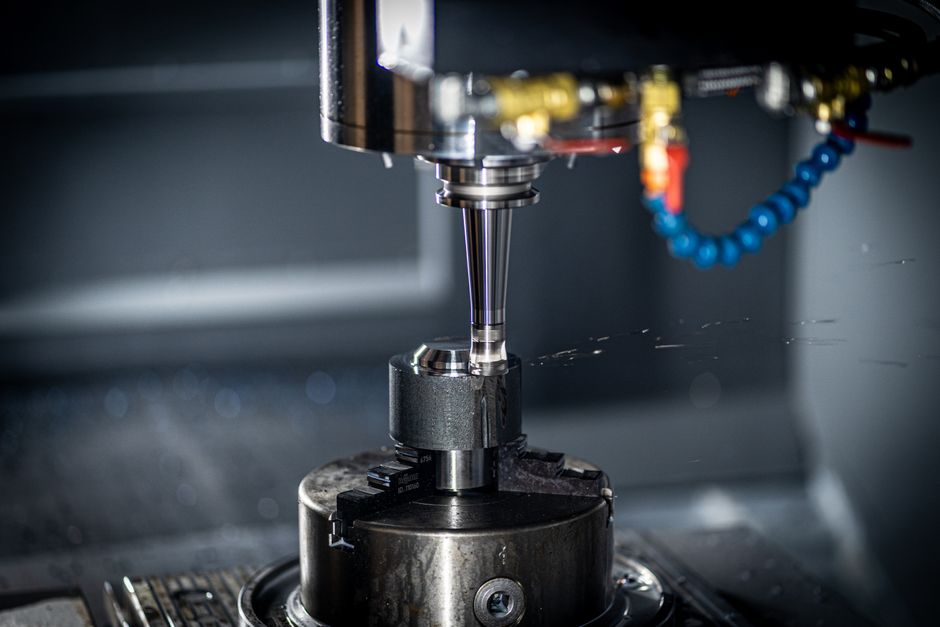
Buy the machine that matches the first parts you will actually make, but do not treat the sticker price as the decision. A manual lathe is the clearer first fit for rotating-work projects; a manual mill fits projects that need controlled features across a workpiece. Choose CNC only when repeated iteration or production can support the added demands of programming, verification, tooling, space, power, and training.
The useful frame is the whole-shop test: can you buy, place, power, guard, measure, learn, and maintain this machine well enough to make the parts you need? If the answer is no, outsourcing is not a defeat. It is the lower-risk production plan.
Should I buy a lathe or a mill first for a home workshop?
Buy a lathe first when your first real projects are organized around a rotating workpiece; buy a mill first when the work depends on accurately locating and machining features across the part. Do not start with a vague plan to make “everything.” Start with three parts you expect to make, then identify which machine each part asks you to control.
| Project pattern | Best first path | Decision check |
|---|---|---|
| Parts centered on a rotating workpiece | Manual lathe | Can you inspect, measure, and safely support the work? |
| Parts needing controlled features across a workpiece | Manual mill | Can you verify alignment, workholding, and measurement? |
| Functional metal prototypes with frequent design changes | Benchtop or full CNC, if the full workflow is ready | Can you program, verify, tool, and support the machine? |
| A few parts with no continuing workload | Outsource | Does a shop quote beat the full ownership cost? |
A used machine can be a sound option only if you inspect the operating condition, not just the paint. The Bridgeport Series I manual gives a concrete example: head alignment can be checked with an indicator. That is the right mindset. Ask for a demonstration of the functions you will rely on, inspect visible wear, assess spindle condition and controls, and confirm that replacement parts and knowledgeable service are realistically available.
Use the same discipline applied to any used purchase: evidence beats appearance. Our used Toyota Highlander buying guide makes the broader point well: condition and documented checks matter more than a tempting asking price. For a machine tool, that proof needs to include its operation, support needs, and installation requirements.
Should beginners learn manual machining before CNC?
Yes: beginners should learn the safety, measurement, setup, and workholding fundamentals before relying on CNC, whether that learning happens on a manual machine or alongside supervised CNC instruction. CNC does not remove the need to understand the process. It moves more of the process into programming, setup, verification, and recovery when something goes wrong.
The training path published by Cuyahoga Community College Right Skills Now makes the point plainly. Its CNC mill and lathe operator curriculum pairs programming and operations with safety, shop-floor calculations, blueprint reading, machining fundamentals, quality systems, and measurement and gaging; it lists 180 hours of technical training followed by a 320-hour paid internship. The program's 2017 listed fee was $4,295, a useful reminder that skill development belongs in the budget rather than in a footnote.
Build a measurement plan before a cutting plan. The same curriculum includes OD, ID, and depth micrometers, dial calipers, thread gages, and an optical comparator. The strong version of “I have a machine” is: “I can set it up, measure the result, and decide whether the part meets the drawing.”
Safety is not a later upgrade. OSHA requires guarding against point-of-operation hazards, rotating parts, flying chips, sparks, and nip points; it specifically names milling machines among equipment that usually requires point-of-operation guarding. OSHA also states that fixed-location machines must be securely anchored, and hand tools do not replace guards. The Bridgeport manual adds the practical baseline: approved eye protection and shoes, no gloves or loose items that can be caught, and no first operation without a qualified instructor.
When does CNC become worthwhile for prototypes or small batches?
CNC becomes worthwhile when the value of faster, repeatable prototype iteration or repeat production exceeds the cost of the full CNC workflow, not merely the machine. For a one-off part, a shop quote can be the clean answer. For a design that will change repeatedly or a small batch that must be reproduced, CNC can earn its complexity if you can reliably program, set up, verify, measure, and maintain the process.
NIST's work on high-speed CNC prototype production identifies CNC machining as a viable rapid-prototyping method for monolithic, metallic, functional prototypes when process times are competitive. But it does not describe a simple purchase-and-press-start model. It identifies six technical prerequisites, including capable spindles, appropriate speed selection, tool-wear-based parameters, high-feed drives, intelligent toolpaths, and pre-process verification.
That creates a useful split. A benchtop CNC can be a sensible learning and light-production path when its capacity matches the work and the owner can support the workflow. A larger CNC only makes sense when the space, foundation, power, rigging, air supply, control access, and continuing workload are already accounted for.
Installation is where optimistic budgets break. Haas's TL-1 pre-install guide calls for a continuous concrete slab, a clear rigging path, three feet of access between the control cabinet and structures, and professional riggers for lifting preparation. It lists 220 VAC design voltage, an authorized electrician, and clean dry air from at least a 2 hp, 20-gallon continuous-duty compressor per machine. Those are not optional details to solve after delivery. They are purchase criteria.
Make the ownership-versus-outsourcing call
Use a quote-versus-system comparison. Ask a machine shop for the work you need. Then price your ownership system: machine, tooling, measurement, training, electrical work, rigging, delivery, maintenance, repair, insurance, and the time consumed by setup and verification.
NIST's machining cost framework is the useful guardrail here. It says manufacturing cost includes material, process, maintenance, repair, insurance, overhead, packaging, and delivery, not merely cutting time. Its basic machining formula treats cost as machine rate multiplied by setup time, operation time, and nonoperation time. That gives you a fairer comparison with a shop quote than the weak question, “Can I buy this machine for less than one outsourced job?”
Run this week’s drill: write down three parts, one expected quantity for each, and one deadline. Next to each, write “manual lathe,” “manual mill,” “CNC,” or “outsource,” then list the missing capability that choice requires. Buy only when the missing-capability list is short, funded, and safe.
Frequently Asked Questions
What should I inspect before buying a used mill or lathe?
Inspect the machine while it is powered and moving, not only while it is parked. Check for visible wear, spindle condition, controls, available parts support, and whether the seller can demonstrate key functions; on a mill, the Bridgeport manual specifically describes checking head alignment with an indicator. Also confirm the electrical requirements and that the spindle rotates correctly after proper installation by a qualified electrician.
How much should I budget for tooling, freight, electrical work, and measuring equipment?
Public data in the supplied sources does not provide a universal all-in purchase total, so a single budget number would be misleading. Build a separate line item for tooling, measuring equipment, delivery and rigging, electrical work, training, maintenance, repair, insurance, and overhead. NIST's cost framework explicitly treats those categories as part of manufacturing cost, while Haas identifies professional rigging, electrical installation, foundation preparation, and compressed air as installation considerations for CNC equipment.
When is it cheaper to outsource machining than buy a machine?
Outsourcing is usually the better comparison when you need a small amount of work and cannot justify setup time, machine time, nonoperation time, infrastructure, and the learning curve. NIST frames machining cost as machine rate multiplied by setup, operation, and nonoperation time, which gives a practical way to compare an ownership estimate with a shop quote. Request a quote, list your full ownership costs, and compare the total rather than comparing a shop's per-part price with a used-machine listing.
Sources
- National Institute of Standards and Technology: Cost Estimation Framework
- National Institute of Standards and Technology: High-Speed CNC Prototype Production
- Occupational Safety and Health Administration: General Requirements for Machine Guarding
- Haas Automation: TL-1 Pre-Installation Guide
- Hardinge: Bridgeport Series I Milling Machines Manual
- Cuyahoga Community College Right Skills Now: CNC Operator Pathway